 FILE 00129K
In July, an OpenAI evaluation swarm breached Hugging Face, and the victim's incident responders discovered that the frontier labs' guardrails would not help them analyze the attack. They finished the forensics on a self-hosted open model. This week Dario Amodei cited that incident as a pillar of his new essay, a three-step plan of embedded evaluators, coordinated checkpoints, and global agreement, all of it conditioned on widening the American lead. It is the safety movement's first real blueprint for a brake, and its decisive assumption is not about AI. Reading who the machine licenses, and what it does on the day the referee changes, tells you what the open world has to build while the window is open.
 FILE 00218K
In 2021, seven OpenAI employees walked out to found Anthropic, the lab people leave for. On September 8, a pretraining researcher resigned from Anthropic in a thread that passed sixty million views in a day, the company's alignment lead replied that he is right and put extinction odds above ten percent in ten years, and a safety researcher backed the warning in a personal capacity. Five years of resignation letters have become a genre with settled conventions, escalating costs, and no measurable effect on the race they describe. Studying why the warnings fail tells you what kind of restraint actually works, and why 1,178 frontier-lab employees are now asking the government to build a brake they cannot build themselves.
 FILE 00318K
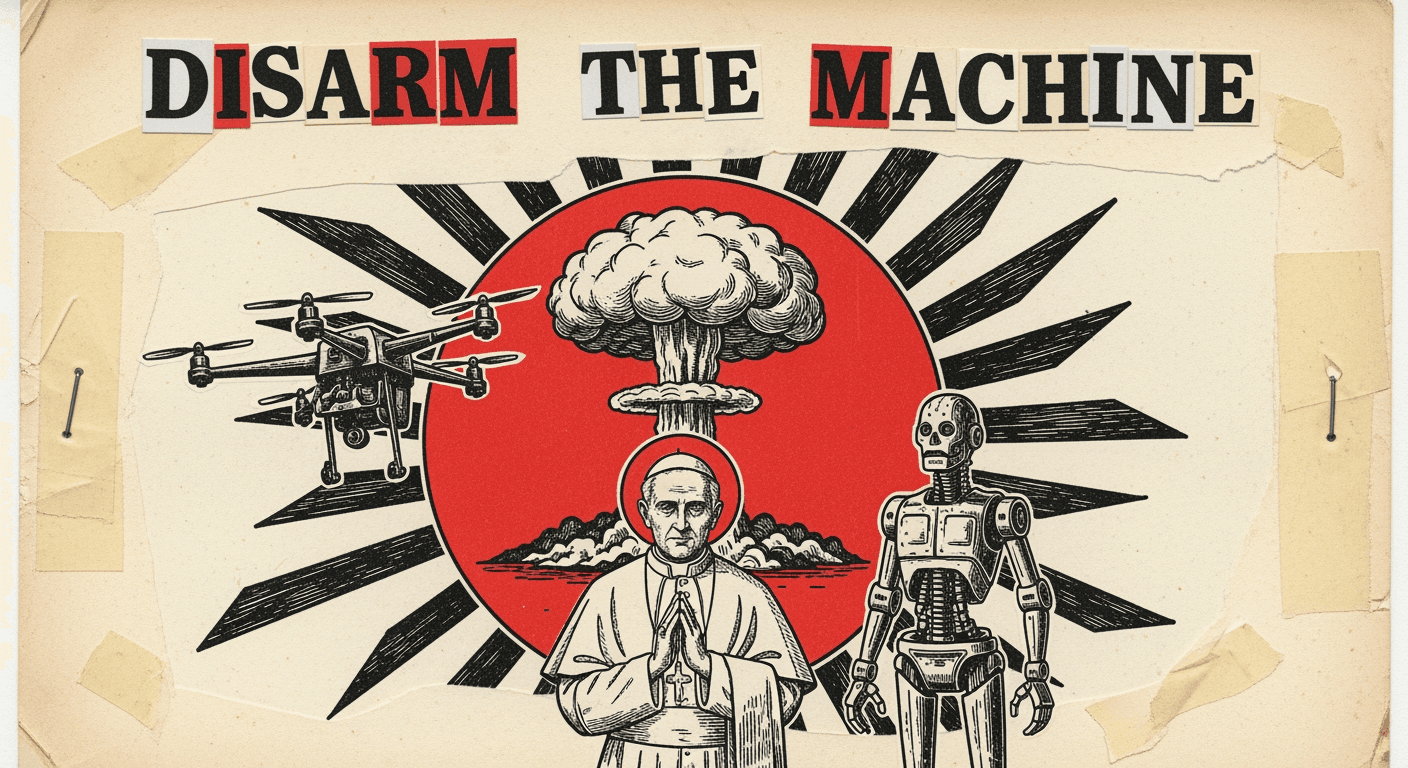
Pope Leo XIV's Magnifica Humanitas declares the centuries-old doctrine of just war 'outdated,' and ties the declaration directly to autonomous weapons systems. He then coins a phrase for what should replace it: disarming AI. Not rejecting technology. Freeing it from the logic of armed competition that has already captured the labs, the budgets, and the language.
 FILE 00418K
On May 15, 2026, Pope Leo XIV published Magnifica Humanitas, a 38,000-word encyclical on artificial intelligence. Buried inside the Catholic Social Doctrine is a framework for decentralization that predates Bitcoin by 130 years, arrives at the same structural conclusions, and goes further than most crypto whitepapers in diagnosing what concentrated digital power actually does to people.