decode(); deploy(); disrupt();
Who Teaches the Machine: How Grail is Decentralizing the Most Consequential Phase of AI Development
Pre-training gives AI knowledge. Post-training teaches it judgment: what to refuse, how to reason, what to value. This is the phase where alignment happens, and until now, it has been exclusively controlled by a handful of corporations behind closed doors. This week, a research paper from Grail demonstrated that the bandwidth barrier keeping RL post-training centralized was 99% phantom, an artifact of how we were moving data, not a physical constraint. The implications extend far beyond compression ratios.
Recent
Browse by topic →The Philosophy of the Rupture
In 1989, Francis Fukuyama declared that liberal democracy had won, that history, understood as ideological struggle, was over. Thirty-seven years later, Jonathan Rauch argues in The Atlantic that America has a fascist president, while Mark Carney tells Davos that the rules-based international order is finished. Both are describing the same phenomenon from different angles: the collapse of an endpoint that was never as stable as advertised.
The Silicon Valley Warlord
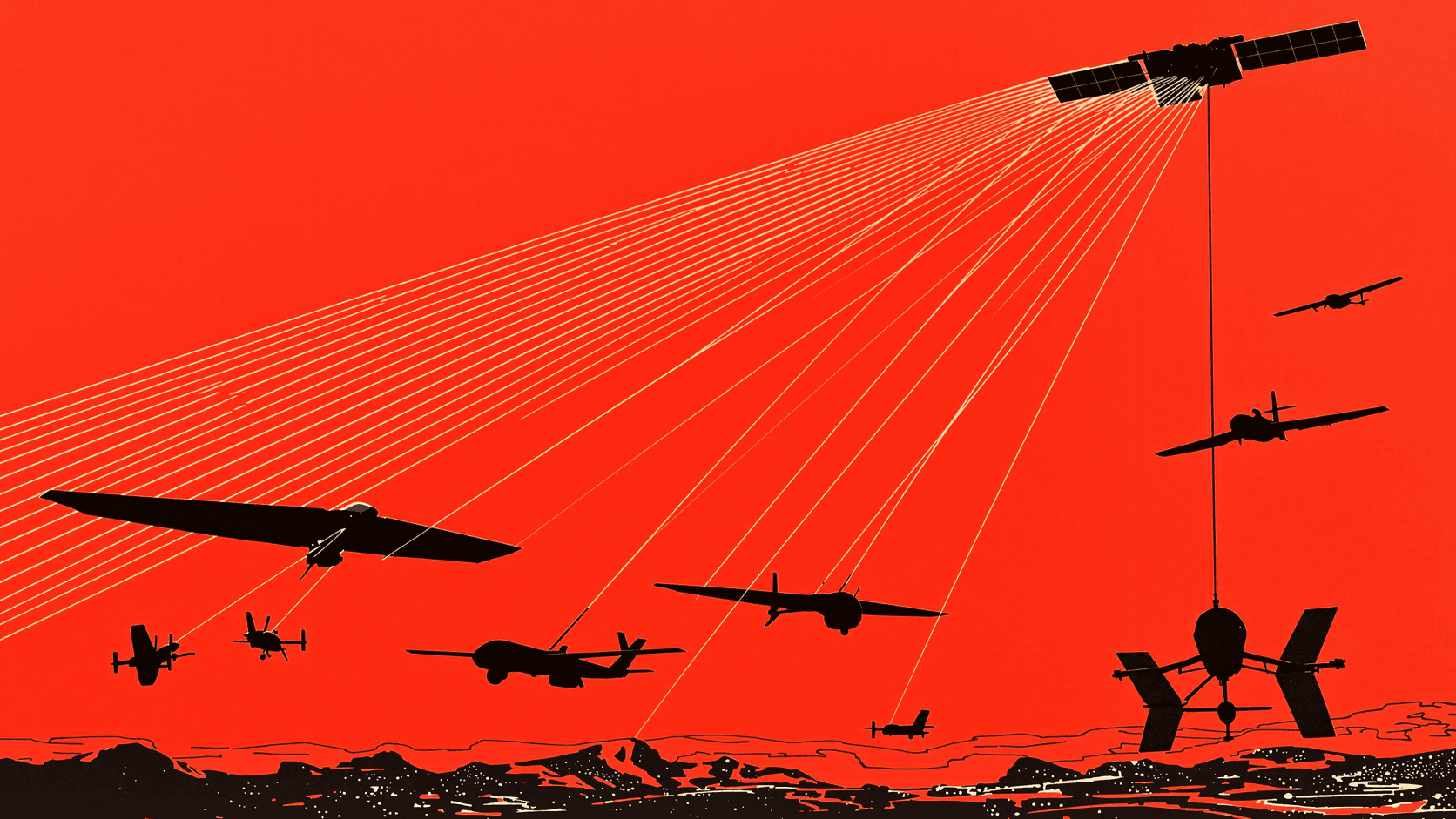
A former Uber executive now controls DARPA, the Pentagon's AI office, and $200 billion in defense lending authority. In a revealing podcast, Emil Michael laid out the timeline: 20-30% of defense spending on autonomous weapons within a decade, robots as 'the new front line,' and an open door for startups who want to build the machines that kill. What remains for those of us who refuse to accept this trajectory?
The Internet is the Datacenter: How Templar is Building the Final Form of Decentralized AI Training
For eighty years, the most powerful technologies have required concentration: co-located machines in fortress datacenters, tightly controlled by those who could afford the infrastructure. This week's research breakthrough from Templar marks something different, a technical path toward intelligence as genuinely distributed public infrastructure, where your home GPU can train frontier models alongside Google's datacenters.
Why I'm Exiting DEUS at TGE: When Sophisticated Structure Meets Questionable Economics
A critical analysis of XMAQUINA's three-entity legal framework and why governance rights ≠ ownership. After reading their own documentation, I'm selling at Token Generation Event.
The Second Crypto War: A Private Ethereum
In 1988, Tim May predicted encrypted systems would 'alter completely the nature of government regulation.' In 1993, Eric Hughes declared 'Cypherpunks write code.' Thirty years later, developers are going to prison for doing exactly that. But something is shifting—Vitalik is building privacy wallets, Naval is calling Zcash 'insurance against Bitcoin,' and a team of physicists just launched the first fully decentralized private blockchain. The cypherpunks are fighting back.
Vote No on BOT-08: We Must Not Fund the Weaponization of Humanoid Robotics
The XMAQUINA DAO faces a defining vote. BOT-08 proposes investing $203,500 in Foundation Robotics—the only U.S. humanoid company openly building killer robots. This isn't just about financial returns. It's about whether we become complicit in the militarization of robotics. I'm urging my fellow DAO members to vote no.


